Lunch Break Legends: 12 British Games You Can Beat Before Your Brew Goes Cold
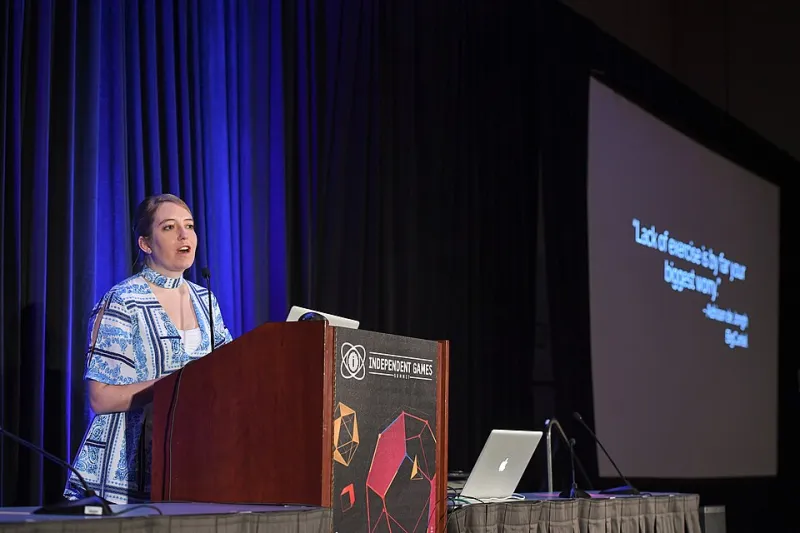
Photo: Official GDC, CC BY 2.0, via Wikimedia Commons
Some lunch breaks need a plan. You’ve got forty-five minutes, a lukewarm brew and a controller with a dodgy stick. The last thing you want is a 60-hour open-world epic staring back at you. That’s where short UK-made games come in. They’re sharp, strange and designed to be finished in a sitting — or at least a meaningful run. Here are twelve picks for 2026 that’ll fit round a sandwich and teach you something useful while they’re at it.
1. The Good Time Garden — Coal Supper
Time: 20 minutes. Skill: curiosity.
This free surreal adventure drops you into a pink, squelchy world and asks you to poke at things until they make sense. There’s no combat, no timer and no proper tutorial. You learn by prodding, prodding again and laughing when the garden prods back. It’s a brilliant reset button for a stressful day, and it reminds you that experimentation is a skill worth keeping sharp.
2. KAMI — State of Play
Time: 30–45 minutes. Skill: spatial reasoning.
A paper-folding puzzler that looks like origami and thinks like a chess problem. You’ve got limited moves to turn a coloured sheet into a single shade, and every fold matters. It’s perfect for a lunch break because the puzzles are bite-sized, but the ‘one more go’ pull is real. Play it when you want your brain to click rather than churn.
3. Monument Valley — ustwo games
Time: 45–60 minutes. Skill: perspective shifting.
Impossible architecture, quiet storytelling and puzzles that make you feel clever without ever shouting about it. You rotate the world, line up paths and realise the answer was hiding in plain sight. It’s a gentle reminder that changing your angle is often more useful than trying harder at the same one.
4. A Good Snowman Is Hard To Build — Draknek & Friends
Time: 45 minutes if you’re sharp. Skill: planning.
A monster rolls snowballs around a garden and tries to build snowmen. That’s the pitch, and it’s lovely. Underneath is a tidy little puzzle game about sequence, space and undoing your mistakes. The reset is instant, which makes it ideal for short sessions. Get stuck, laugh, rewind, try again. No drama.
5. Overboard! — inkle
Time: 30–45 minutes per run. Skill: consequence reading.
You’ve pushed your husband overboard on a 1930s cruise ship. Now you’ve got to keep your story straight, manage the passengers and get away with it. Every conversation is a little gamble, and every replay teaches you something new about the people around you. It’s a masterclass in paying attention to what isn’t being said.
6. Proteus — Ed Key and David Kanaga
Time: 30 minutes. Skill: observation.
There are no goals here. You wander an island, listen to the sounds shift and watch the world react to you. Proteus is the anti-checklist game: it asks you to notice rather than optimise. On a busy day, that’s a genuinely useful skill. Stick your headphones on, take a walk and let your brain unfurl.
7. The Swindle — Size Five Games
Time: 20–30 minutes per heist. Skill: risk management.
A steampunk stealth-platformer where every run is a tight little job. You’ve got a timer, a bag of tricks and a police force that would quite like a word. The Swindle teaches you to read a room, commit to a plan and bail when the odds turn sour. That’s a proper life skill, honestly.
8. Reigns — Nerial
Time: 10–20 minutes per reign. Skill: decision-making under pressure.
Swipe left or right to keep your kingdom from imploding. It sounds simple until the church, the army and the people all want different things. Reigns is brilliant in short bursts because every reign is a tiny chain of trade-offs. You’ll learn quickly that saying yes to everything is not a strategy.
9. Hohokum — Honeyslug
Time: 30–60 minutes. Skill: play.
You’re a long, colourful snake-kite thing drifting through odd little worlds. There’s no fail state, no score and no rush. Hohokum is about messing about and seeing what happens. It’s the game equivalent of doodling in the margin, and it’s perfect when your brain needs to stop gripping the wheel for a bit.
10. One Night Stand — Kinmoku
Time: 30 minutes. Skill: empathy.
A short visual novel about waking up after a one-night stand and working out what happens next. The writing is warm, awkward and very human. You’re reading social cues, choosing your words and learning that the ‘right’ answer isn’t always the clever one. It’s a lovely little story that fits neatly into a quiet lunch break.
11. The Room — Fireproof Games
Time: 45 minutes for chapter one. Skill: observation.
A gorgeous puzzle box game that rewards patience and a good eye. The first chapter is the perfect lunch-break slice: tactile, mysterious and full of tiny details that matter later. It teaches you to slow down and look properly, which is harder than it sounds when you’ve got one eye on the clock.
12. Dear Esther — The Chinese Room
Time: about an hour. Skill: attention.
A landmark walking sim set on a Hebridean island, with a narrator who gives you fragments rather than answers. It’s not for everyone, but if you give it your full attention, it’s a masterclass in atmosphere and ambiguity. Play it with headphones, not a podcast. Let the quiet do its thing.
The point isn’t to speedrun your lunch. It’s to finish something, feel a little sharper and get back to your day without a 40-hour commitment hanging over you. Short games are not lesser games. They’re just better at fitting into real life. And in 2026, that’s a proper level-up.