Low Volume, High Awareness: Audio Drills for Thin-Wall Living
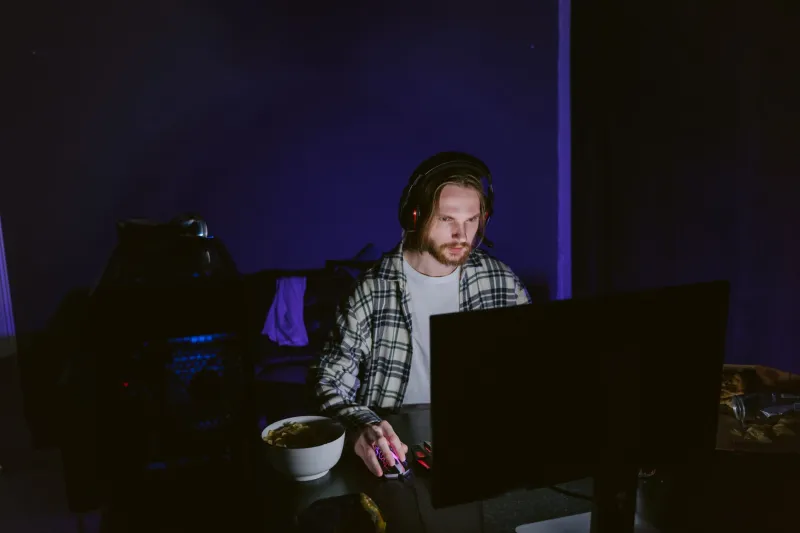
There is a particular kind of British guilt that comes from hearing your own game echo through a wall at 10:40pm. You know the sound: a distant explosion, a teammate shouting, the telltale click of a reload. Your neighbour works nights. You work a nine-to-five. The flat has walls like wet cardboard. And yet, somehow, you still want to get better at hearing footsteps.
The good news is that audio awareness is not a volume knob. Crank it up and you mostly get fatigue, a sore head and a stern look in the hallway. Treat it as a skill and you can train it quietly, in small bursts, with a brew going cold beside you. This is the low-volume approach: better listening, not louder listening.
Why audio is a skill, not a fader
In games like Valorant, Counter-Strike 2, Apex Legends and Rainbow Six Siege, sound gives you information before your eyes do. A reload behind a wall, a zip line, an ultimate voice line, a crouch-step on metal: these are cues, not background noise. The skill is noticing them early, labelling them correctly and acting on them without panicking.
That skill improves with repetition. It does not improve by pushing your headset to the edge of distortion. In fact, too much volume blurs sounds together. Your ears need contrast and rest, not a wall of noise. Think of it like learning to pick out one instrument in a song. You do not need the song louder; you need to know what you are listening for.
Set up a flat-friendly listening station
Start with closed-back headphones. They keep sound in and neighbour noise out, which means you can hear game cues at a lower volume. Make sure the fit is decent. A loose pad or a worn cable can push you to turn things up for no good reason. If your headset has a bass-heavy profile, try a flatter preset for practice. Booming explosions are fun, but they mask the small stuff.
Next, separate your settings. Use one profile for practice and one for normal play. In practice, drop the master volume, mute or lower music, keep voice chat at a sensible level and leave the game's dynamic-range option alone unless you know what it does. Some games call this night mode or compression. It can help in a flat, but it also squashes the difference between a nearby footstep and a distant one. Test it, do not just trust it.
Finally, do the obvious neighbour check. Put your headphones on, play a loud moment, then take them off and stand a metre away. If you can hear the game clearly through the pads, it is probably too loud for a thin wall. Adjust before the complaint, not after.
The 12-minute evening session
This is a skill session, not a grind. Keep it short enough that you actually do it. Twelve minutes is plenty.
Minutes 1-3: warm up the ears. Load a practice range or a custom lobby. Do not play a match. Listen to your own footsteps, a reload, a jump and a weapon swap. Close your eyes for a few seconds and point at where each sound came from. This feels daft. It works.
Minutes 4-8: run one cue drill. Pick a single sound and hunt it. In Valorant's range, walk, jog and crouch on different surfaces and note the difference. In CS2, load a practice map and listen to reloads and weapon switches at low volume. In Apex, use the firing range to separate shield cracks, zip lines and ability sounds. In Overwatch 2, make a custom game and trigger one ultimate at a time.
Minutes 9-11: review without visuals. Watch a short replay or clip with the screen brightness down or your eyes off it. Pause before each key moment and say what you heard and what it meant. 'That was a reload behind the box.' 'That was a crouch-step on the left.' 'That was a rope, not a door.' You are building a mental dictionary.
Minute 12: stop. Take the headphones off. Let your ears reset. Do not chase one more game. The session is done.
Cue drills that work at whisper volume
The footstep ladder. In a custom game, have a friend or bot walk, run and crouch at set distances. At each stage, say the surface and direction out loud. Wood, metal, gravel, carpet. Left, right, front, back. Keep the volume low enough that you have to concentrate. That concentration is the training.
The reload rhythm. Pick three weapons and listen to their reloads. Count the beats. Then mix them up and identify each one without looking. In tactical shooters, a reload is often the difference between pushing and holding. Learn the rhythm, not just the sound.
The ability audit. Choose one agent or hero and trigger every ability in a practice lobby. Listen for the wind-up, the activation and the tail. Overwatch ultimates are a good example: each one has a distinct voice line and swell. Valorant abilities often have a tell before the effect. Apex legends have audio cues for tactical and ultimate use. Make a short list and test yourself.
The cross-room map. Stand still in a safe corner. Close your eyes. Have a bot or friend move around you. Point at the sound and name the room or cover piece. Do this for two minutes. It is surprisingly tiring, which is why you keep it short.
Do not confuse loudness with clarity
A common trap is turning up the volume after a bad game. You missed a footstep, so you crank the dial. But the problem was probably not volume. It was attention, fatigue or a messy audio mix. Loudness makes explosions louder. It does not make you better at separating a reload from a door.
Take breaks. Ear fatigue is real, and it makes everything sound mushy. If you have been playing for two hours, your audio awareness is already dropping. A five-minute break with silence is better than another match at a higher volume. Also, keep voice chat civil and sensible. A teammate shouting into a hot mic is its own kind of audio hazard.
The polite-neighbour checklist
- Use closed-back headphones, not speakers, for practice.
- Set a practice profile with lower master volume and no music.
- Check leakage from a metre away before you start.
- Keep sessions short and finish at a reasonable hour.
- Avoid subwoofers, soundbars and 'just one more' cinema moments.
- If your neighbour works nights, tell them you are doing quiet practice. Most people are sound about it.
- If you share a wall, move the desk slightly away from it and put something soft behind the monitor.
- Do not rage-shout at 11pm. The wall is thin. They can hear you.
A note on game-specific sound
Rainbow Six Siege is a great test of audio discipline because the sound model is complex and vertical. Practise in a custom lobby, not in ranked, and learn one map at a time. Hunt: Showdown rewards low-volume listening because the ambient noise is part of the information. Valorant and CS2 are cleaner, which makes them ideal for building basic cue recognition. Apex is busier, so use it later in your practice calendar. Overwatch 2 is excellent for ability audio because ultimates are designed to be heard through the chaos.
The point is not to become a human sonar array. It is to build a habit: listen deliberately, label quickly, act calmly. You can do that with the volume low, the neighbour asleep and the kettle still warm. Quiet ears, sharp reads. That is the thin-wall meta.